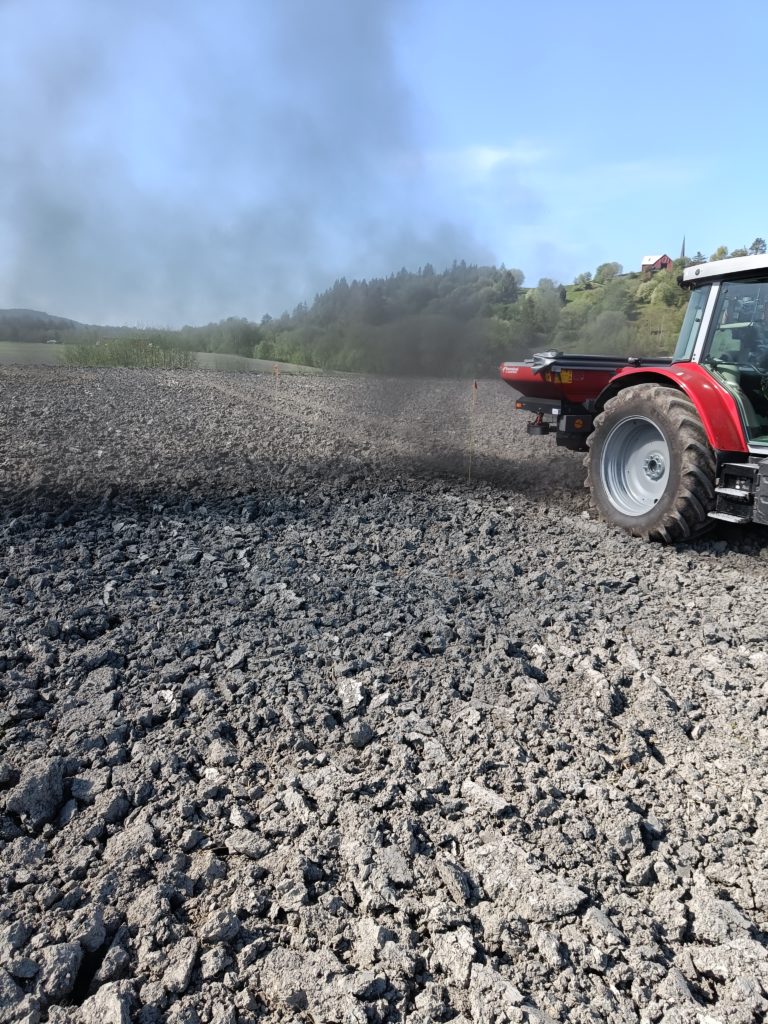
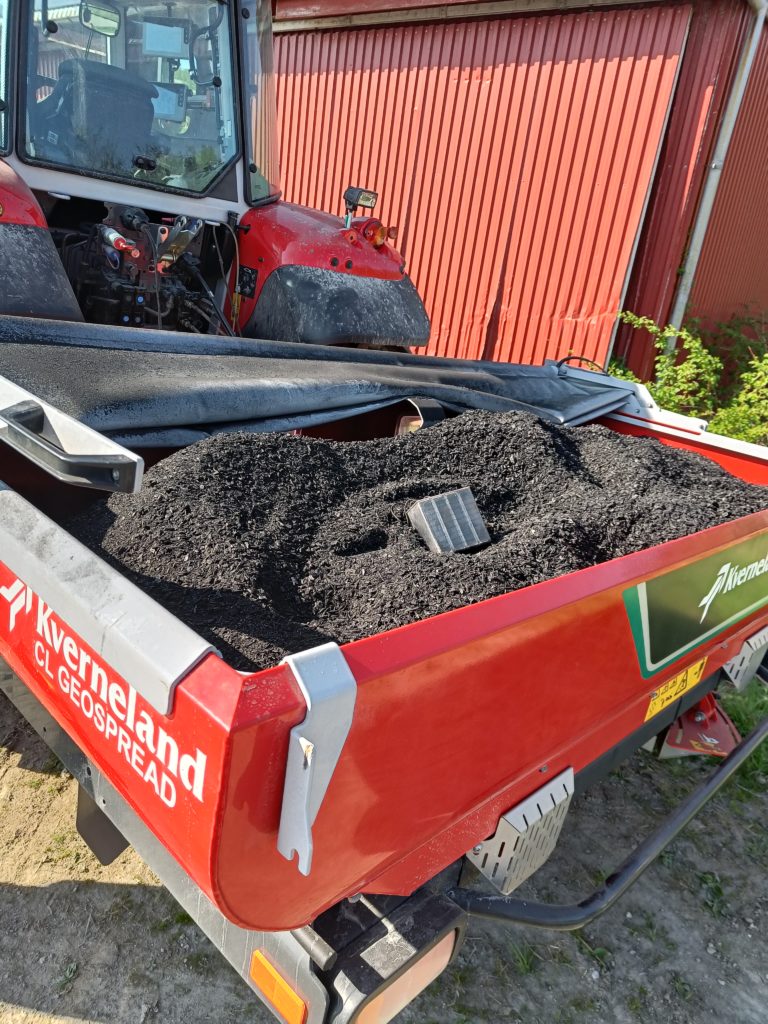
Sommeren 2023 gjennomførte Mære landbruksskole et mindre forsøk med biokull på en åker der det skulle såes korn. Målet var å undersøke eventuell positiv effekt av ulike mengder biokull, 1 tonn per dekar, 2 tonn per dekar og 3 tonn per dekar. Biokullet ble spredd med vanlig sentrifugalspreder langs 25 meter lange ruter. Under spredningen oppstod det imidlertid problemer med støv og ujevnt spredebilde, noe som resulterte i at det ikke gikk å oppnå ønsket mengde biokull. For å håndtere dette ble behandlingene omdøpt til liten mengde, medium mengde og høy mengde for å reflektere de faktiske forholdene under spredningen.
Bruk av sentrifugalspreder viste seg å være problematisk på grunn av stor mengde støv langt utøver feltet og en veldig ujevn fordeling av biokullet på jordoverflata. Dette førte selvfølgelig til en varierende effekt. Etterpå ble alternative metoder diskutert for å få til en jevnere spredning som for eksempel blanding med husdyrgjødsel eller kompost. Fordeler med å blande biokull med husdyrgjødsel eller kompost er at det reduserer problem med lette partikler og støv under spredning og sikrer en jevnere fordeling. Dette kan samtidig gi en positiv synergieffekt der både næringsstoffer fra gjødselen og jordforbedrende egenskaper fra biokullet utnyttes. Et annet alternativ er å prøve å fukte biokullet før spredning hvilket burde redusere støv og gjøre det lettere å spre materialet jevnt. Dette kan også bidra til bedre integrering av biokullet i jorda. Fremover er plan å teste ut forskjellige blandinger med andre restprodukter fra driften på Mære og forhåpentligvis få til mer effektiv og pålitelig spredning.