I prosjektet RESTORE har SINTEF regnet på klimaeffekter ved ulik behandling av reststrømmer fra et gårdsbruk. Det er sett på ulike restmaterialer og om de kan legges i kompost, forbrennes eller brukes i biokullproduksjon. Det er laget en regnearkmodell som gir noen svar på økonomi, mengde produsert og klimaavtrykk for ulike alternativ.
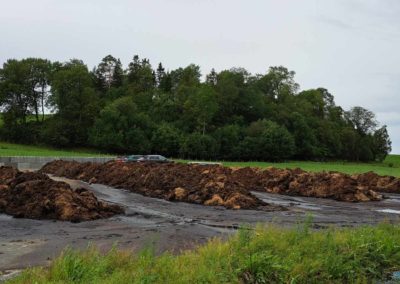
Her er eksempelvis beregningen for kompostering av materialer fra gården på Mære. Det vi velger å kompostere er talle fra stallen og fra kalveavdelingen, rester av for, parkavfall og avfall fra veksthuset. Under sees en tabell over mengdene som ble beregnet i m3 og i tonn.

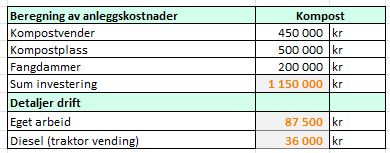
Faste og variable kostnader kan legges inn, her er eksempel på kostnader til etablering av kompostplass med fast dekke, fangdammer og kompostvender. Det er mulig å gjøre dette rimeligere og kanskje også spare ved å gå sammen med andre gårdsbruk. Arbeid er stipulert til 10% stilling og 100 traktortimer med et dieselforbruk på 20 liter/time når venderen kjøres.
Regnearket beregner mengde ferdig kompost vi kan få ut til 200 tonn. Det beregner også klimaavtrykk inndelt i primære (direkte fra komposten) og sekundære utslipp (diesel) og CO2 i organisk materiale som er bundet i komposten.
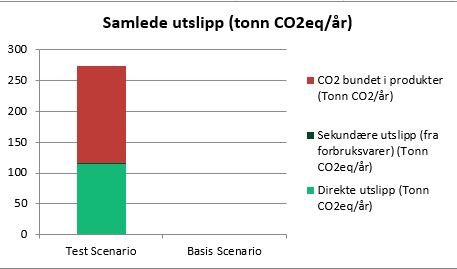
Her ser vi at over halvparten av karbonet er igjen i komposten (156 tonn CO2e) og at diesel utgjør lite (1,6 tonn CO2e). På den annen side er dieselbruken det eneste fossile utslippet, mens de andre er biologiske. Vi tenker vanligvis at biologiske utslipp er en del av kretsløpet og dermed kan regnes til null.
Spørsmålet kan være om vi klarer å øke innholdet av organisk materiale (mold) permanent i jorda når vi bruker kompost. Om vi klarer å binde karbon i jorda på denne måte er det et pluss i klimaregnskapet, usikkerheten er hvor lenge det blir i jorda før det brytes ned igjen. Effekt på bedre plantevekst er ikke med i beregningene
På den negative siden så vet vi at kompostering kan føre til avrenning av næringsrikt vann. Det er derfor vi har lagt inn fangdammer ved kompostplassen. Underveis i komposteringsprosessen kan det også utvikles metan og lystgass. Dette prøver modellen å beregne.
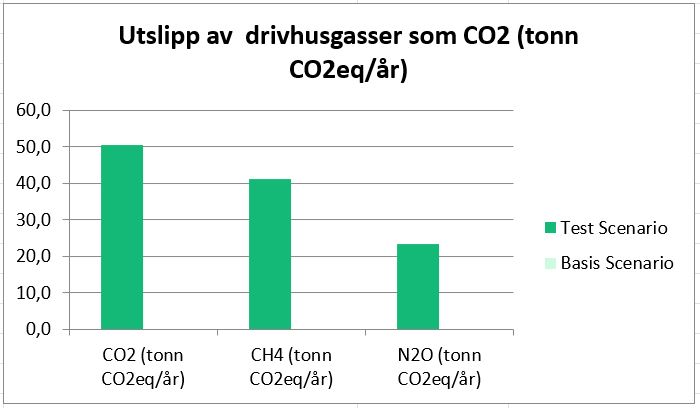
Her er det ikke lagt inn noen sammenligning, men alternativene for disse materialene er ikke nødvendigvis bedre. Noen materialer kan tørkes litt og deretter brennes. Noe kan spres ut på jordet og arbeides direkte inn i jorda.
Vi har også beregnet forbrenning (flisfyring) og produksjon av biokull (og dette kan du se her)
Regnearket som er utarbeidet av Sintef er mulig å få ved henvendelse til oss.