I prosjektet RESTORE har SINTEF regnet på klimaeffekter ved ulik behandling av reststrømmer fra et gårdsbruk. Det er sett på ulike restmaterialer og om de kan legges i kompost, forbrennes eller brukes i biokullproduksjon. Det er laget en regnearkmodell som gir noen svar på økonomi, mengde produsert og klimaavtrykk for ulike alternativ.
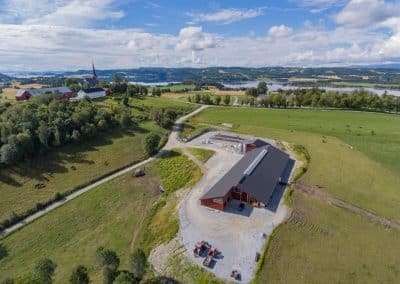
Vi har her sett på beregningen for produksjon av biokull på Mære. I eksempelet legger vi inn at vi har 2000 lm3 (løskubikk) med tørr flis (20% fukt) som tilsvarer 500 tonn vare.
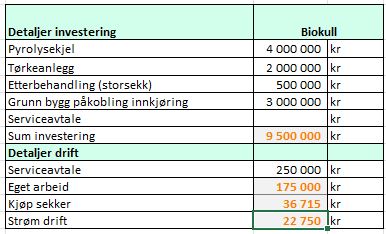
Faste og variable kostnader kan legges inn i modellen, her er eksempel på kostnader til biokullanlegg. Dette er dyre anlegg og om det er en fornuftig investering vil avhenge av inntektssidene: salg av biokull og varme og mulige tilskudd til bruk og karbonlagring. Tilskudd til investeringen er også mulig å få.
Regnearket beregner mengde biokull og mengde varmt vann vi kan få ut av produksjonen, sammenlignet med et basis scenario som i dette tilfellet er flisfyring. Ved fyring i fliskjel får vi nesten dobbelt så mye varmt vann (men ikke noe biokull). Her er energiprisen satt til 1 kr/kWh og biokullprisen satt til 10 000 kr/tonn.
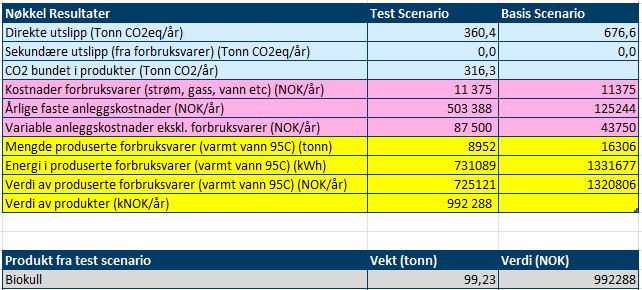
I produksjon av biokull blir omtrent halvparten av tilgjengelig karbon lagret i kullet sammenlignet med full forbrenning. Dette kullet kan så lagres i minst hundre år og dermed er dette ute av kretsløpet. Når vi bruker biokull på jordet regner vi at en mindre andel brytes ned de første årene, men minst 80% vil være stabilt i over hundre år (eller mange hundre).
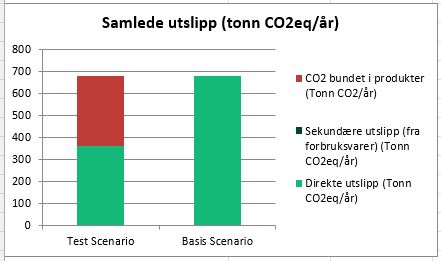
Her er sekundære utslipp satt til null. Det vil være noe bruk av fossil energi til transport og hugging av flis. For produksjon av flis bruker Miljødirektoratet et tall på 7 gram CO2e/kWh som skulle gi for denne flismengden 9,3 tonn CO2e.
Vi har også beregnet utslipp og kostnader med kompostering (og dette kan du se her)
Regnearket som er utarbeidet av Sintef er mulig å få ved henvendelse til oss.