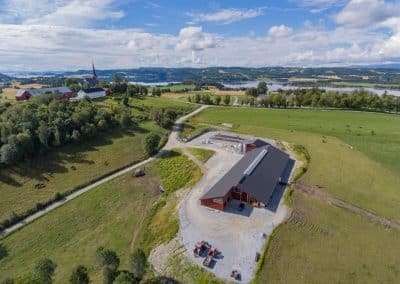
I forbindelse med forskningsprosjektet RESTORE, gjorde vi en analyse av alt av organisk avfall – eller rettere sagt ressurser – på Mære landbruksskole. Målet var å få en bedre oversikt over de ressursene vi har som kan brukes i kompost, biokull-anlegg eller biogassanlegg. I RESTORE ser vi på hvordan vi kan utnytte biokull, biogass, kompost som teknologier for en mer bærekraftig håndtering. Vi ser også på hvordan vi kan bruke biokull for å redusere utslipp av klimagasser eller næringsstoffer.
Fra melkefjøset, ammekufjøset, grisehuset og saufjøset kommer det ca 8500 tonn husdyrgjødsel årlig. Dette er ressurser som kan gå gjennom et biogassanlegg der vi tar ut biogassen før det spres på jorda vår. Fra stallen og fra kalveavdelingen kommer det ca 350 m3 hestetalle og 80 m3 halmtalle. Dette er ressurser som fint kan inngå i et kompostanlegg, men kan også vurderes brukt i et biokullanlegg. I veksthuset bidrar tomatproduksjonen med blad, tyver og noe tomat samtidig som sommer- og juleblomstproduksjonen har noe avfall, tilsammen ca 150 m3. Tomatproduksjonen tømmes ca en gang årlig og dette bidrar med ca 40 m3 tomatplante-rester. Rester fra veksthuset kan inngå i komposten vår, men kan også vurderes brukt i biokullproduksjon og biogassanlegg.
RESTORE er et samarbeid mellom NIBIO, NGI, SINTEF og Mære landbruksskole finansiert av Norges Forskningsråd.